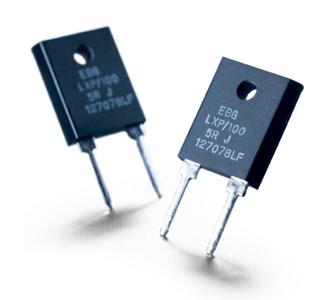
High-voltage systems are at the heart of modern electric vehicles, but they also carry risks. A discharge resistor in the circuit ensures that stored energy is dissipated safely and in a controlled manner, thereby contributing to the safety of people and animals and protecting the high-voltage system.
But what factors should be considered when selecting a resistor, and what characteristics define a high-quality resistor?
This article provides an overview of key requirements and proven integration strategies, and explains why a well-thought-out design is crucial.
The high-voltage DC link places high demands on all components used. A discharge resistor in the DC-link capacitor must ensure the controlled dissipation of energy in the high-voltage DC link and guarantee reliable discharge. Several factors are critical in this regard:
For a discharge resistor in the DC link capacitor to function optimally, it must be precisely tailored to the specific requirements of the high-voltage system and the installation conditions. Key considerations include:



With more than 48 years of experience in resistor technology, Miba offers solutions designed with safety, efficiency, and customer-specific requirements in mind.
Anyone looking for a suitable discharge resistor will find a solution at Miba that is tailored to their specific application and combines efficiency, safety, and durability.
A discharge resistor in the DC link capacitor of high-voltage systems is essential for ensuring safety. Thanks to a combination of robust construction, thermal stability, and intelligent integration, Miba resistors offer a reliable solution for electric mobility.
For manufacturers looking to design future-proof systems, Miba is the right partner. Customized solutions, decades of experience, and uncompromising quality set new standards.
